Pool Deck Pavers Cleaned and Sealed the Right Way
When pavers start looking washed out and worn, most homeowners assume they just need a good rinse. But cleaning is only part of the equation. Without a proper seal after the wash, the surface stays vulnerable - exposed to moisture, staining, and the kind of gradual color fade that sneaks up on you over time.
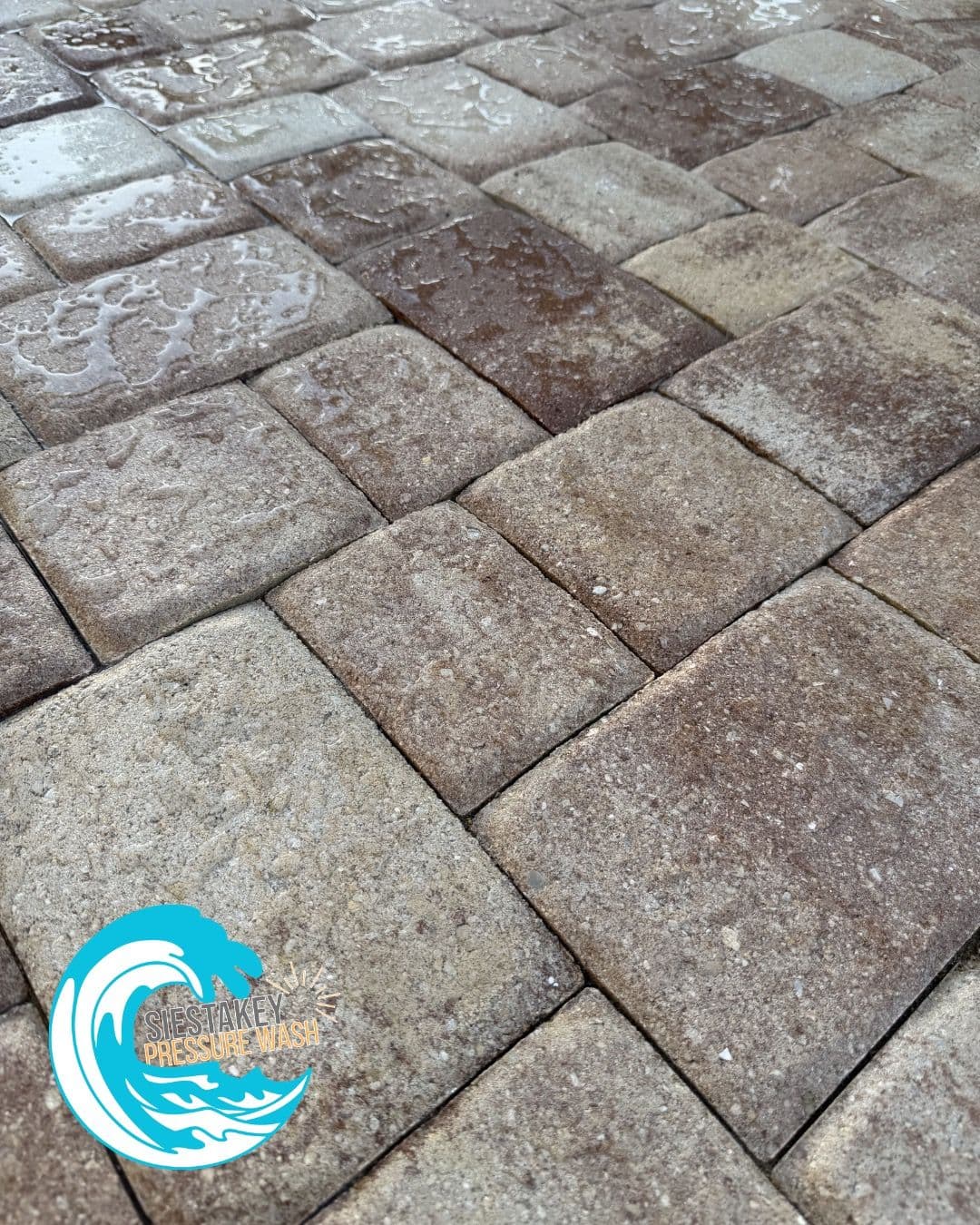
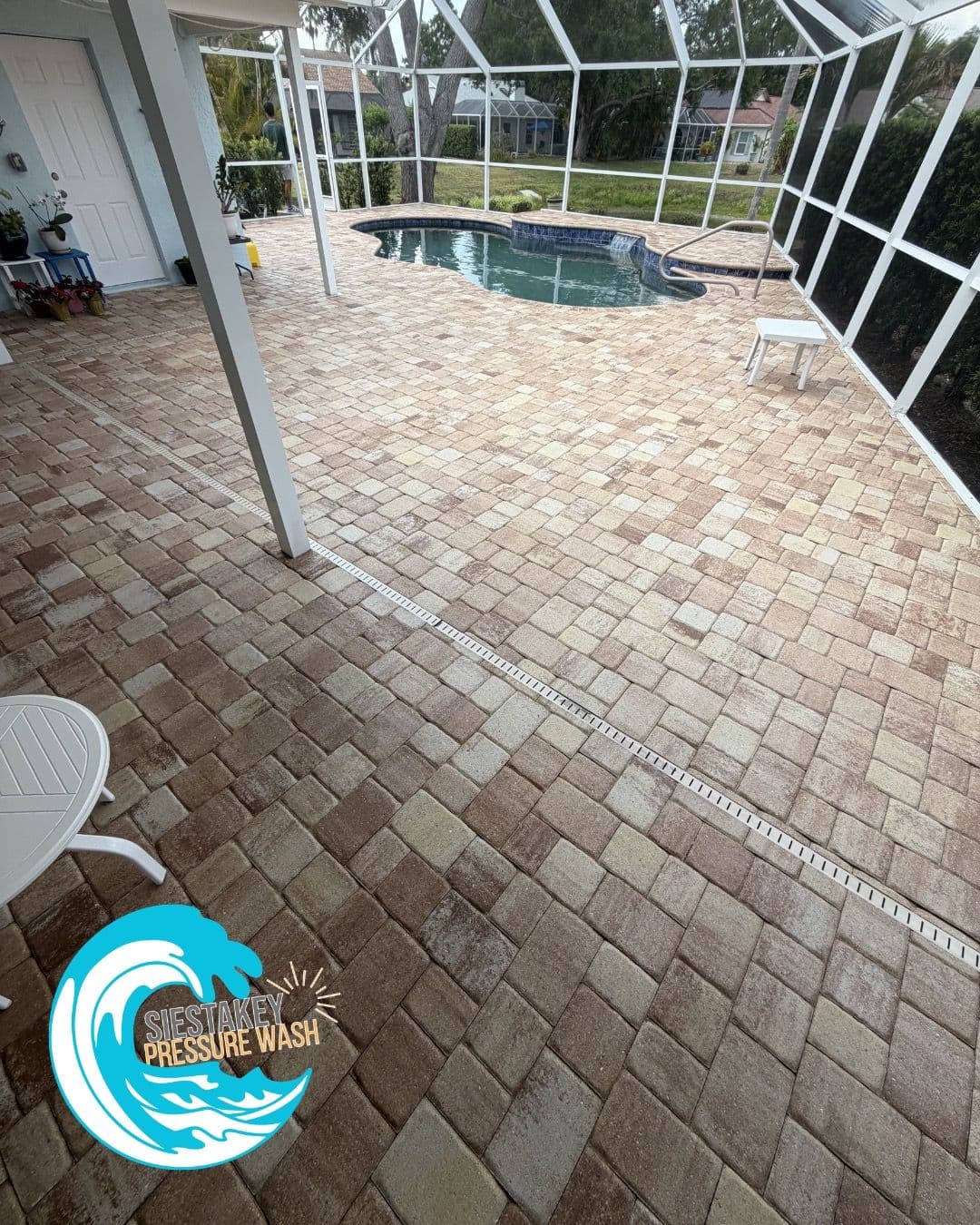
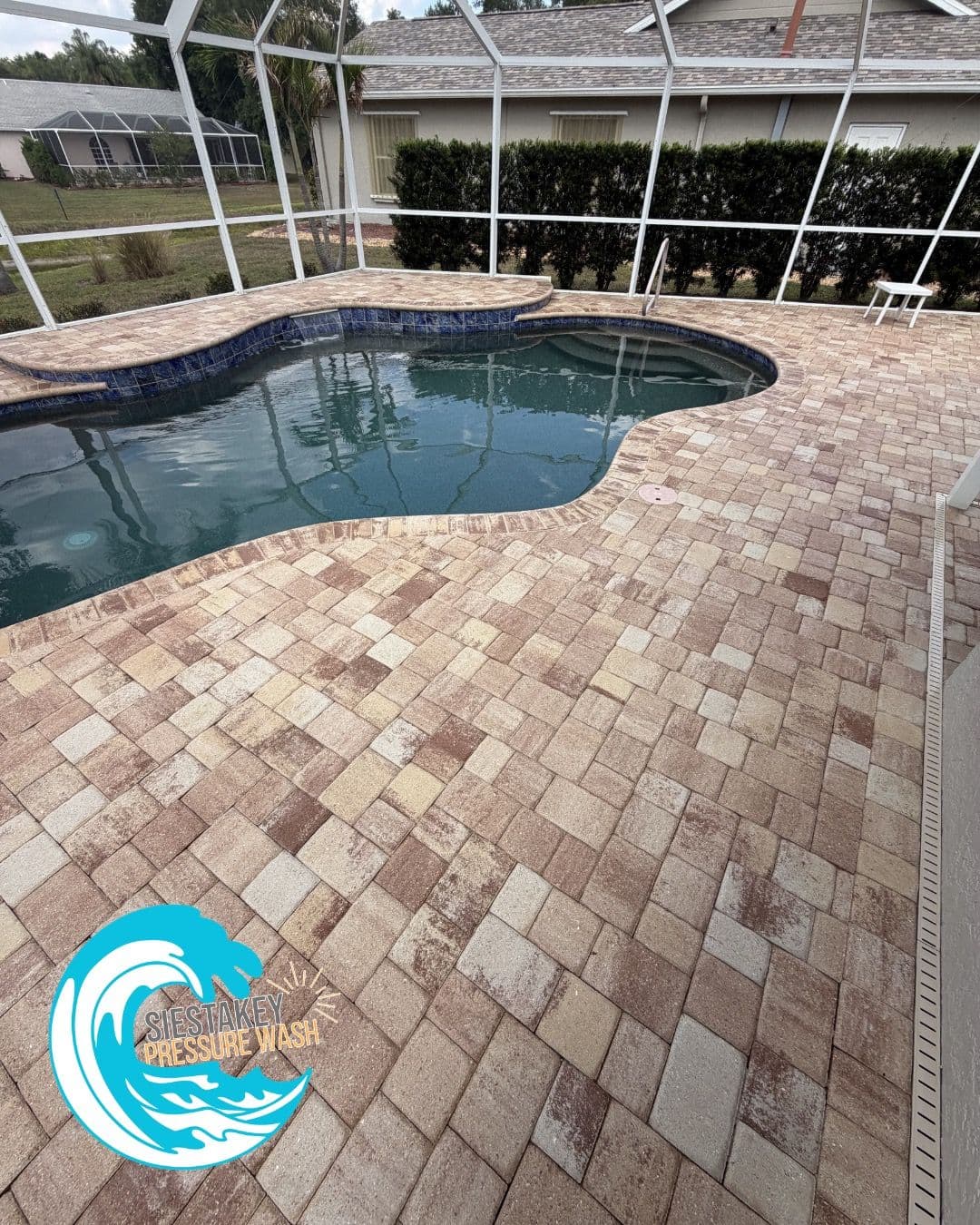
Here's what we were working with: a large pool deck with pavers that had clearly seen some wear. Discoloration across the surface, uneven tones, and the kind of buildup that makes everything look dull no matter how clean the surrounding area is. It's a really common situation for pool decks because they take a beating - constant foot traffic, water splash-out, sunlight, and everything that blows in through a screen enclosure.
We started with a thorough pressure wash to pull all of that grime and buildup out of the surface before anything else. Getting the pavers genuinely clean first is non-negotiable. If you seal over dirt or residue, you're just locking the problem in. Once everything was clean and fully dried, we applied the sealer. That's what brings the color back to life and creates a protective layer that makes the surface far easier to maintain going forward.
Sealing does a few things that a lot of people don't think about. It helps lock in the joint sand so the pavers stay stable. It slows down how fast algae and mildew can take hold again. And it holds the natural color of the stone so you're not watching it fade out year after year. For a pool deck that gets used regularly, it's genuinely worth doing right.
Pavers are an investment. Cleaning and sealing them on a consistent schedule is one of the easiest ways to protect that investment and keep the space looking sharp. If your patio or pool deck is starting to look rough around the edges, this is exactly the kind of work that makes a noticeable difference.