Sealed vs. Unsealed Pavers - The Difference Is Real
Most people don't think about sealing their pavers until they start looking worn out. Faded color, white haze building up in the joints, that dull flat look that just wasn't there when they were first installed. Florida's sun, rain, and humidity work fast - and unsealed pavers take the full hit.
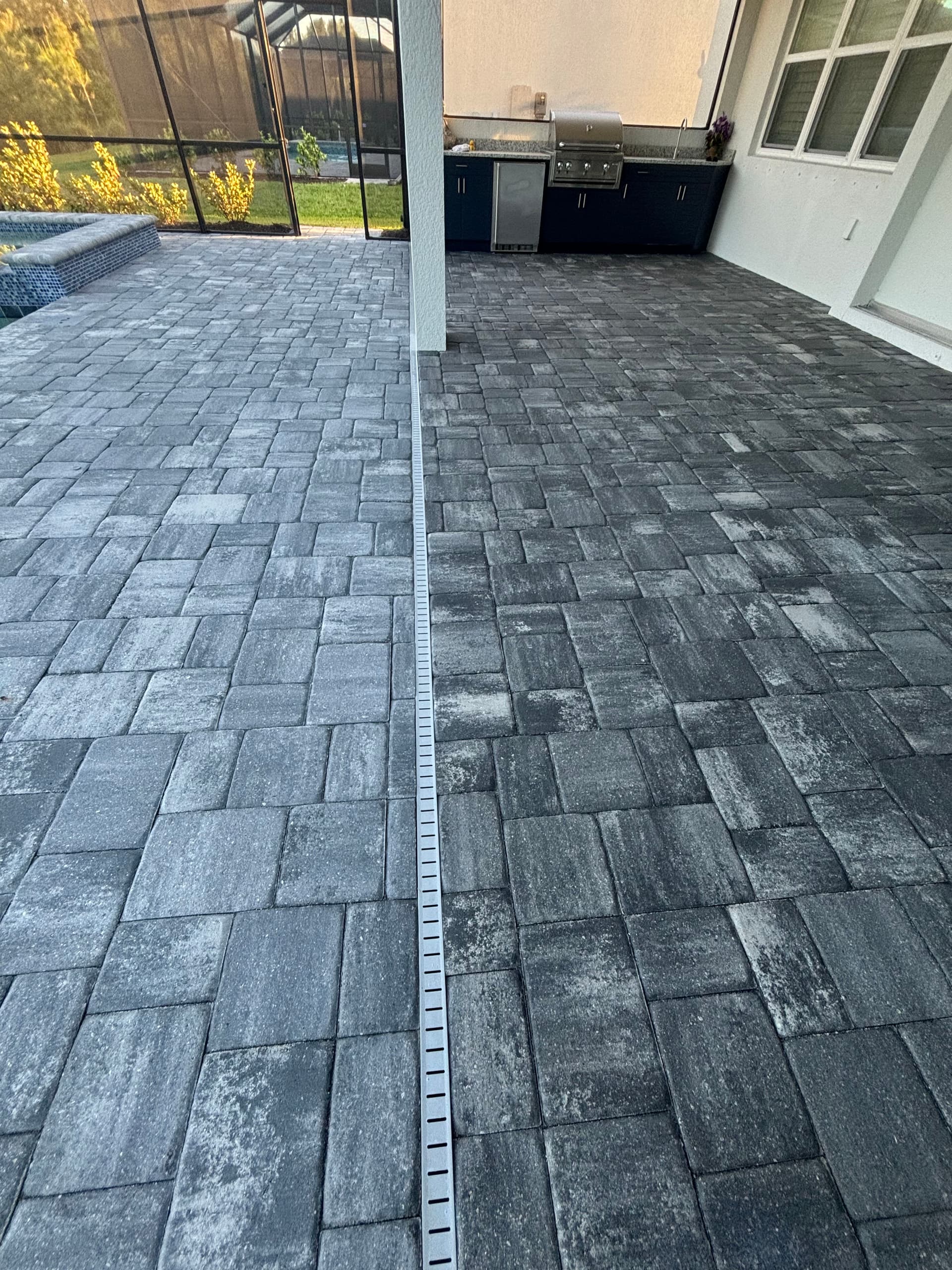
That split-down-the-middle comparison tells the whole story. One side sealed, one side not. The difference in color depth and richness is immediate. The sealed side pulls out the darker, richer tones in the stone. The unsealed side sits flat and dull. This isn't a trick of lighting - this is just what sealer does.
Here's why it matters beyond looks. Sealing creates a barrier that keeps moisture, dirt, and organic growth from working down into the surface and joints. In Florida especially, that protection is doing real work. Between the afternoon rains and the heat, unsealed pavers become a magnet for mold, mildew, and efflorescence - that chalky white mineral buildup you see creeping across the surface over time.
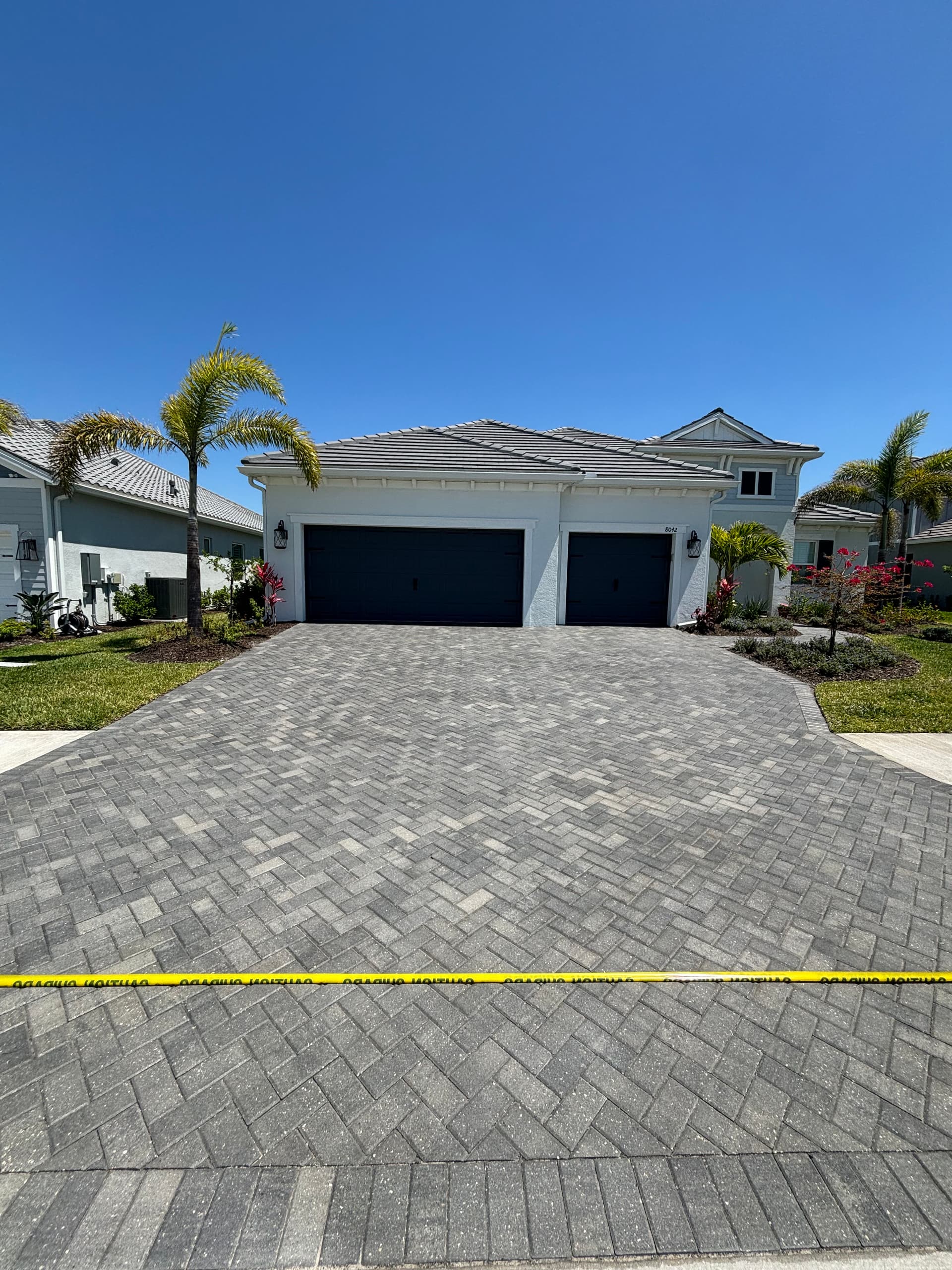
We work on patios, pool decks, and driveways like this all across Florida. Whether it's a large outdoor entertaining space or a wide herringbone driveway out front, the process is the same - clean the surface properly first, then seal it right. Rushing past the cleaning step is where a lot of people go wrong, and it shows in the results.
If your pavers are starting to fade or you're seeing buildup you can't get rid of with a hose, sealing is almost always the next right move. It keeps what you have looking the way it should - and protects your investment from the elements that are constantly working against it.